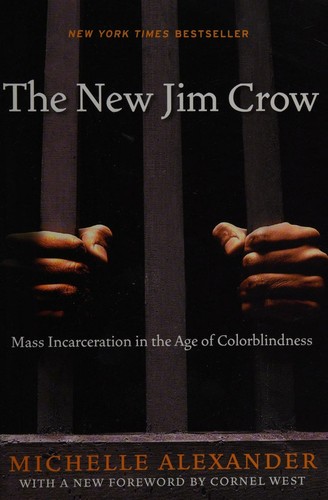
The New Jim Crow
Michelle Alexander
As an Amazon Associate, we earn from qualifying purchases.
Audio Narration
AI-powered text-to-speech
Summary
Michelle Alexander’s 'The New Jim Crow' is a foundational work of contemporary sociology that argues that the American criminal justice system functions as a modern-day system of racial control. The core thesis posits that mass incarceration is not merely a byproduct of crime or poverty, but a deliberate political and social evolution of the same racial caste systems that preceded it: slavery and Jim Crow. Alexander contends that by targeting Black men through the 'War on Drugs' and then stripping them of the very rights won during the Civil Rights Movement once they are labeled felons, the United States has successfully redesigned a system of subordination that is shielded from charges of racism by its 'colorblind' rhetoric. This is not a system of individual bias, but a comprehensive structural 'birdcage' where various laws, policies, and social norms work together to trap a specific demographic in a permanent second-class status. Alexander meticulously demonstrates how the transition from overt segregation to the current era of mass incarceration was facilitated by political maneuvering that exploited racial fears for electoral gain, creating a reality where more African Americans are under correctional control today than were enslaved in 1850.
The strength of Alexander's argument lies in her detailed mapping of the legal and political architecture of the Drug War. She explains that the explosion in the prison population was not caused by an increase in drug use—which studies show is consistent across racial lines—but by a policy shift that incentivized police to target minority communities. Through a series of Supreme Court decisions, the Fourth Amendment’s protection against unreasonable searches and seizures was effectively dismantled in the context of drug law enforcement, granting police nearly unlimited discretion. This discretion, combined with implicit bias and federal funding tied to arrest quotas, led to the hyper-policing of urban centers. Furthermore, Alexander highlights the 'closed-loop' nature of the system: once an individual is branded a felon, they enter a 'parallel universe' where they are legally discriminated against in housing, employment, and access to public benefits, and are often denied the right to vote. This 'collateral consequences' phase ensures that the individual remains marginalized long after their sentence is served, effectively creating a permanent undercaste that is largely invisible to the mainstream public.
'The New Jim Crow' matters because it challenges the prevailing American narrative of linear racial progress. It forces readers to acknowledge that the election of a Black president or the success of a Black middle class does not negate the existence of a system that structurally excludes millions of others based on race. The book serves as a vital tool for activists, policymakers, and citizens who seek to understand why traditional civil rights litigation and incremental reform have failed to elimin...