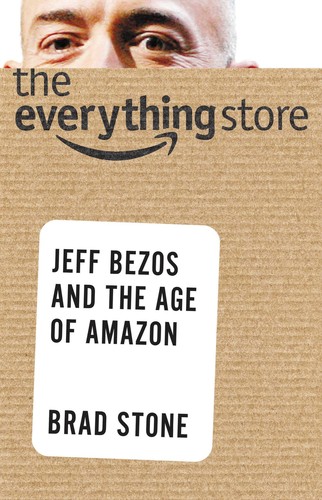
The Everything Store
Brad Stone
As an Amazon Associate, we earn from qualifying purchases.
Audio Narration
AI-powered text-to-speech
Summary
Brad Stone’s 'The Everything Store' is the definitive biography of Amazon.com and its enigmatic founder, Jeff Bezos. At its core, the book posits that Amazon’s world-dominating success is not a product of luck or mere timing, but the result of an uncompromising, long-term vision combined with a ruthless, data-driven operational philosophy. Bezos’s thesis was simple yet audacious: the internet provided a unique opportunity to build a 'universal store' that could offer limitless selection, unparalleled convenience, and the lowest possible prices. This 'Everything Store' wasn't just about selling books; it was about building a utility—an infrastructure for modern commerce. The book explores how Bezos applied his background in quantitative finance (honed at D.E. Shaw) to the chaotic world of retail, creating a culture that prioritizes efficiency and customer satisfaction over short-term profits and employee comfort. It is a story of extreme disruption, where the status quo is constantly challenged by the 'flywheel' effect—a virtuous cycle where lower prices lead to more customers, which attracts more sellers, which further lowers costs and prices.
The central argument of the book revolves around Amazon’s unique 'Day 1' mentality and its relentless focus on the customer. Stone provides evidence of this through the company’s history of taking massive, high-stakes gambles that often looked like failures to Wall Street but were calculated moves for future dominance. Key examples include the massive investment in fulfillment centers during the dot-com crash, the multi-year development of the Kindle to disrupt the very book business that made Amazon famous, and the birth of Amazon Web Services (AWS). Stone illustrates that Amazon’s growth was driven by a 'missionary' rather than 'mercenary' mindset—though Bezos himself was often seen as a demanding and even 'scary' leader. The evidence presented shows a company that is willing to cannibalize its own products and engage in aggressive, often predatory tactics to eliminate competitors (such as the acquisition of Zappos or the price war with Diapers.com). Stone paints a picture of a company that is fundamentally a 'math house,' using algorithms and metrics to drive every decision, from the placement of items in a warehouse to the pricing of a best-seller.
'The Everything Store' matters because it provides a blueprint—and a cautionary tale—for the digital age. It explains the mechanics of how a single company can reshape entire industries, including retail, publishing, and cloud computing. In the real world, the principles found in this book are applied by startups trying to achieve scale and by legacy corporations attempting to survive digital disruption. The concept of the 'Flywheel' is now a standard model in business schools, and Amazon's 'Two-Pizza Team' and 'Six-Page Memo' rules have influenced organizational design globally. Furthermore, the book explores the ethical implications of such massive power,...
This is a preview. Sign up free to read the full summary.
📢 Share this summary
💡 Share this summary with friends who love reading!
Frequently Asked Questions
What is The Everything Store about?
The Everything Store by Brad Stone is covered in a free summary on Book Digest that walks through the book's central ideas, themes, and key takeaways — readable in about 14 minutes.
Who wrote The Everything Store?
The Everything Store was written by Brad Stone. It was published in 2020.
How long does it take to read the The Everything Store summary?
The The Everything Store summary takes about 14 minutes to read — roughly 10+ hours faster than the full book, while still covering the key insights, themes, and main takeaways.
What are the key takeaways from The Everything Store?
The summary distills The Everything Store into its core ideas — the key insights, memorable quotes, and actionable takeaways. You can read the full breakdown above on this page.
What genre is The Everything Store?
The Everything Store falls under Business. You can find more summaries in this category on Book Digest.
Can I read the The Everything Store summary for free?
Yes. You can read the The Everything Store summary on Book Digest for free — free members get 3 full summaries every month, with no credit card required.
Related Book Summaries
More in Business
